Prefab and Modular Construction in California: Where It Fits and Where It Doesn't
Prefab, Panelized and Modular: What the Terms Mean
- Panelized systems use factory-built wall, floor or roof panels that are shipped flat and assembled on site.
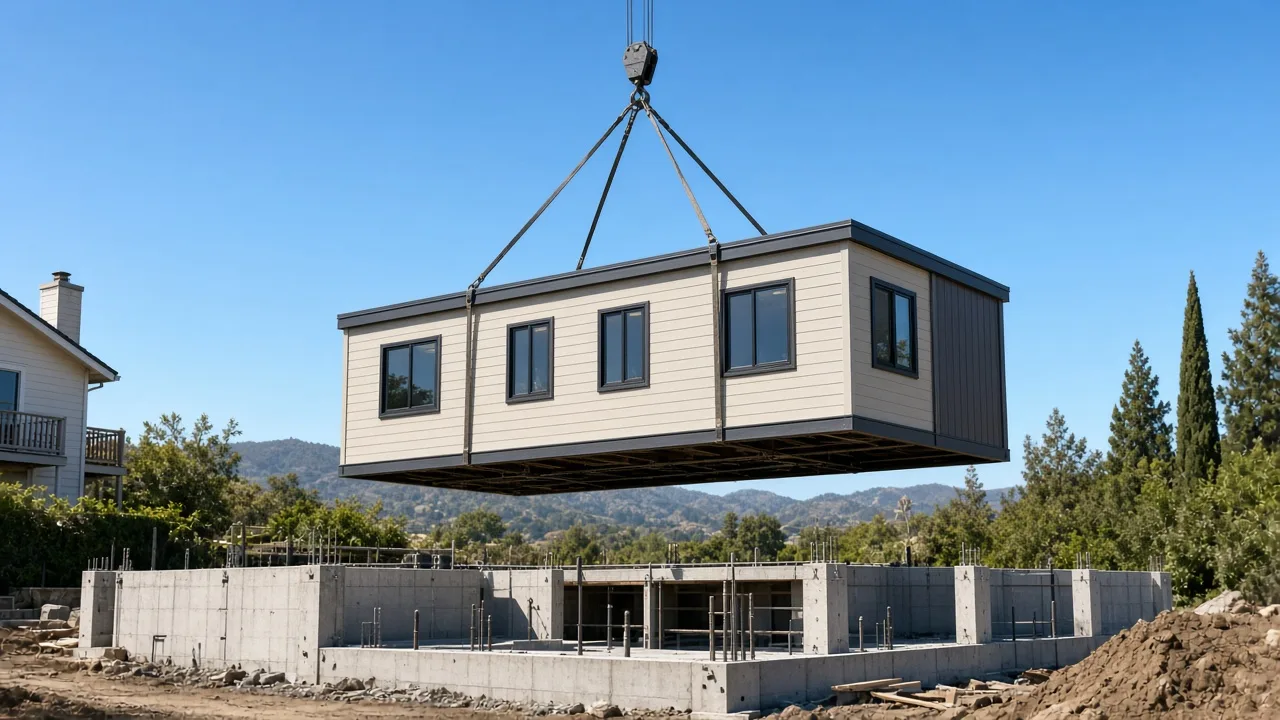
- Modular construction builds complete three-dimensional sections, or modules, in a factory. The modules are transported to the site, set on a foundation and joined together.
- Prefabricated components include items such as trusses, bathroom pods and kitchen assemblies that are produced off site and installed into a conventional structure.
Where the Advantages Show Up
Factory construction takes place indoors, so weather delays are less of an issue. Work can proceed on the foundation and site utilities while modules are being built, which can compress the overall schedule. Repeated processes and controlled conditions also help with consistent quality, and material waste can be lower than on a typical site.
Modular methods have been used for multifamily housing, accessory dwelling units, student housing, hotels and some commercial work. Projects with repeated unit layouts tend to benefit the most.
Limits and Trade-Offs
- Design constraints. Module sizes are limited by what can be shipped on public roads, and complex shapes may be harder to achieve.
- Early decisions. Factory production needs finalized designs before manufacturing begins, so late changes can be costly.
- Logistics. Delivery routes, crane access and staging space at the site must be planned carefully, especially on narrow urban lots and hillsides.
- Financing and payment timing. Manufacturers often require deposits and progress payments before anything is delivered, which affects cash flow and lender requirements.
Codes and Approvals
Modular buildings must still meet the applicable codes. In California, factory-built housing is subject to state oversight, and the foundation, utility connections and site work are normally reviewed and inspected by the local building department. Owners should confirm how the approvals will be handled before signing a contract.
Questions to Ask a Manufacturer
- What is the realistic production and delivery schedule, and what happens if it slips?
- Which parts of the work are included in the price: foundation, utilities, crane, finishes?
- How does the manufacturer handle warranties and corrections after installation?
- Can the company provide references from completed projects in California?
Sustainability and Cost Considerations
Factory settings can make it easier to recycle offcuts, reduce site disturbance and tighten the building envelope, which can support energy goals. Cost savings are not guaranteed, however. Transportation, crane time and the premium for custom features can offset savings in labor and schedule. The clearest benefits often come from shorter financing periods and earlier occupancy, so owners should compare total project cost, not only the construction price.
Visiting a manufacturer's plant and a completed project is one of the best ways to judge quality before committing.
Key Points to Remember
- Finalize the design before ordering modules; changes after production begins are expensive.
- Plan access for trucks and cranes, including road permits and overhead utilities.
- Coordinate foundation work so it is complete when modules arrive.
- Budget for site-built elements such as utilities, stairs, porches and landscaping.
The Bottom Line
Prefabrication works best when the design is settled, the site is accessible and the owner values speed and consistency. It rewards careful planning and involvement of the builder, designer and manufacturer from the earliest stages. For custom, irregular or heavily site-specific buildings, conventional construction may remain the better choice. Compare real quotes and schedules before deciding.
v>